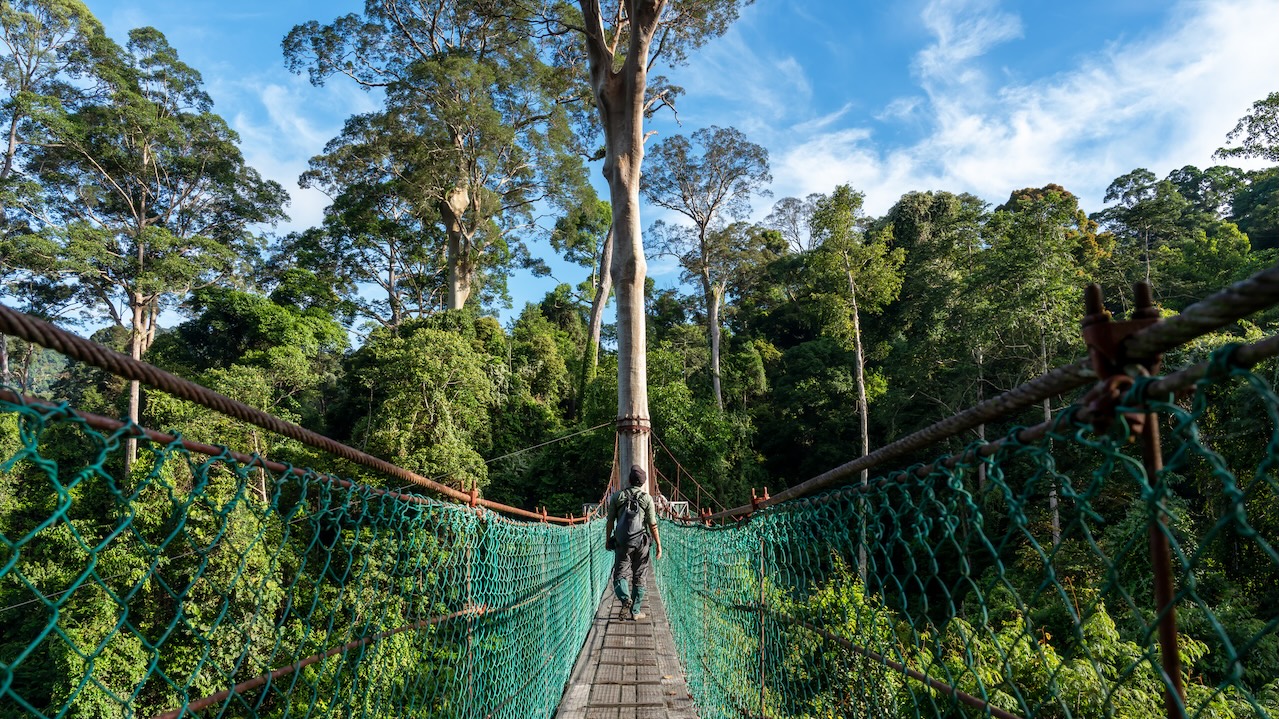
Borneo’s rainforests are among the major attractions in the subregion. Photo credit: iStock/Cn0ra.
Travelers seeking to see more of the world in just one trip should consider BIMP-EAGA as a destination.
A multi-stop travel itinerary in BIMP-EAGA could include the Coral Triangle diving circuit, Borneo’s rainforest and wildlife experiences, and cross‑border cultural trails. These destinations give tourists a look at the best the subregion has to offer.
Enticing tourists to make multiple stops across the subregion in one trip aligns with ASEAN’s push to promote intraregional travel. ASEAN is more aggressively promoting multi-country travel across Southeast Asia while marketing the region as a single destination as part of a strategy to convince travelers to stay longer and spend more and to spread tourism benefits to secondary destinations.
To grow the sector more strategically, BIMP-EAGA is looking at developing tourism circuits inside economic corridors, leveraging on the strengths of each area covered to make offerings more appealing. This also makes strategic use of existing and planned tourism infrastructure, ensuring better connectivity for tourists.
Connected destinations
A BIMP-EAGA itinerary would certainly qualify when it comes to finding connected destinations. Connectivity has considerably improved since the subregional cooperation program was established in 1994, making multi-country travel both practical and efficient.
In the West Economic Corridor, the Pontianak–Kuching–Bandar Seri Begawan land route stands out as an example of cross-border transport connectivity that links the Brunei Darussalam, Indonesian, and Malaysian parts of Borneo Island. Private vehicles can cross through three border crossing points: Entikong–Tebedu, Aruk–Biawak, and Nanga Badau–Lubok Antu. There are also bus services that operate on the Entikong–Tebedu route and more bus routes are being eyed. Immigration procedures have been streamlined at key border crossing points.
Over the years, the introduction of direct flights within the subregion promoted intraregional travel and tourism. However, these were suspended during the COVID-19 lockdowns. The good news is that the airlines have resumed some services and are exploring new routes. For example, Royal Brunei Airlines started direct flights to Balikpapan in February 2025 from Bandar Seri Begawan, which can connect to flights to Kota Kinabalu or Kuching. AirAsia Malaysia revived its direct flights to Pontianak from Kuching in September 2025. Following its acquisition of MASwings, the Sarawak government plans to add more routes and flights within the subregion.
An added incentive to explore BIMP-EAGA is the Philippines‘ extension of the travel tax exemption to travelers departing from any international airport or seaport in Mindanao and Palawan to any destination in the subregion. The exemption is being offered until 30 June 2028.
Rainforest tours
While connectivity is important, the destinations themselves are primary considerations for tourists.
Borneo’s rainforests are among the major attractions. About 22 million hectares of rainforests, known as the Heart of Borneo, make up about a third of Asia’s largest island. A tour could include visits to Ulu Temburong National Park in Brunei Darussalam; Betung Kerihun National Park, Gunung Palung National Park, and Lake Sentarum National Park in West Kalimantan; Kinabalu National Park in Sabah; and Mulu National Park in Sarawak.
With plants and animals on the island comprising about 6% of the world’s biodiversity, the island offers opportunities to see orangutans, pygmy elephants, proboscis monkeys, and other unique wildlife.
Another potential itinerary that would appeal to adventure travelers involves visits to the subregion’s highest peaks: Mount Apo in Davao City, Mount Klabat in North Sulawesi, and Mount Kinabalu in Kota Kinabalu.
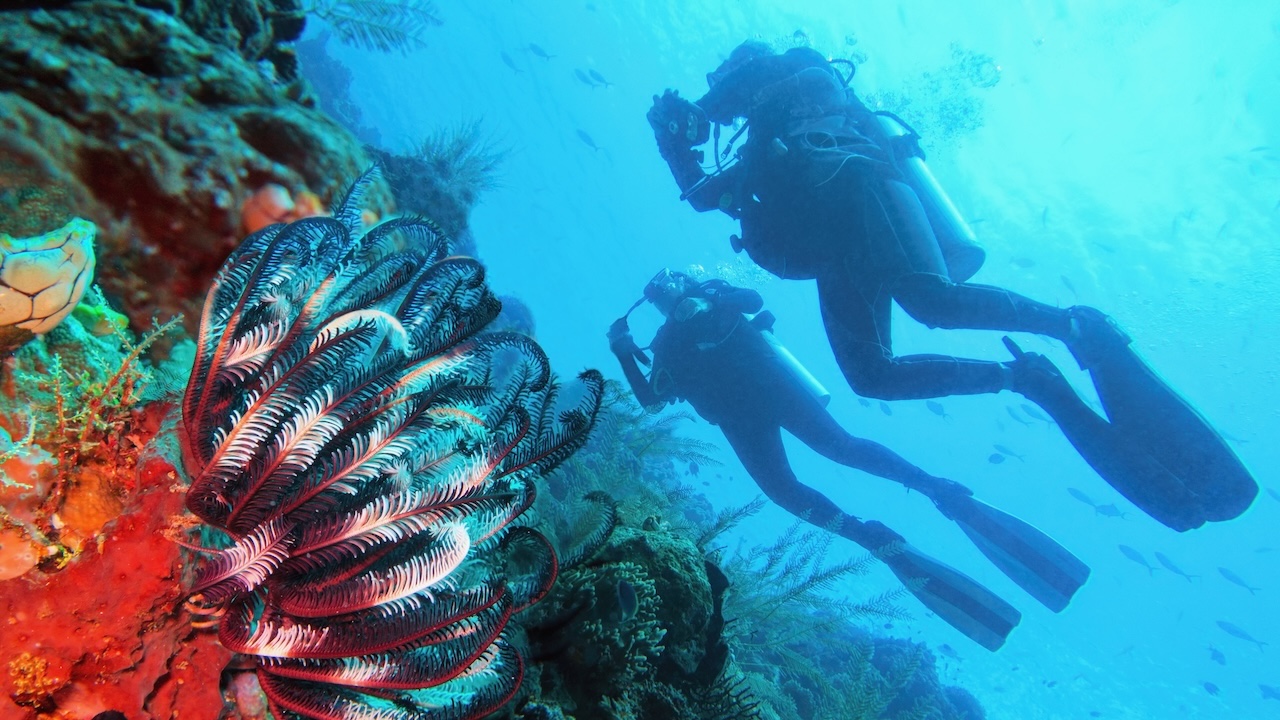
BIMP-EAGA's underwater wonders include Raja Ampat in West Papua, Sipadan and Layang-Layang Islands in Sabah, and Coron and El Nido in Palawan, to name a few. Photo credit: iStock/Tunatura.
Under the sea
BIMP-EAGA’s seas offer equally alluring attractions. Indonesia, Malaysia, and the Philippines are part of the Coral Triangle, which is considered as the global center of tropical marine diversity.
The roughly triangular area includes the Raja Ampat group of islands in West Papua, which the New York Times recently named among the top 52 places to visit. The archipelago provides a habitat for more than 75% of the world’s hard coral species and is home to about 2,500 fish species, including manta rays and whale sharks.
Raja Ampat is part of the East Economic Corridor, which includes the remotest provinces in eastern Indonesia. Travelers seeking more marine and forest wilderness adventures can also explore the beautiful coasts and underwater attractions of Maluku and the wetlands of West Papua.
Coron and El Nido in Palawan, which is part of the West Economic Corridor, are popular stops in the Coral Triangle diving circuit. These two islands are said to be Alex Garland’s inspiration for the book-turned-movie, The Beach. Divers can explore World War II shipwreck diving sites. Other activities include island hopping, snorkeling, swimming, and sightseeing.
Meanwhile, the North–South Economic Corridor, originally the Greater Sulu–Sulawesi Seas Economic Corridor, has potential to become a marine and coastal tourism circuit, linking sites in the Davao Region (e.g., Samal Island) to those of Manado City (e.g., Bunaken National Park), and for marketing North Sulawesi tourism.
Borneo also has its own underwater wonders, offering occasional sightings of orcas, hammerhead sharks, and thresher sharks in waters off Sipadan and Layang-Layang Islands in Sabah. Endangered dugongs have been spotted off Pulau Tiga and Mantanani Island. Whale sharks are also known to appear close to Kota Kinabalu in the Tunku Abdul Rahman Park islands.
A travel itinerary for those who want to explore both land and sea attractions could include stops in all seven UNESCO World Heritage Sites in the subregion: Lorentz National Park in Papua; Kinabalu Park in Sabah and Gunung Mulu National Park and Niah Caves National Park in Sarawak; and Puerto Princesa Subterranean River and Tubbataha Reefs Natural Park in Palawan and Mount Hamiguitan Range Wildlife Sanctuary in Davao Oriental. Another potential itinerary is a Turtle Islands Heritage tour of marine sanctuaries between Sabah and Tawi-Tawi.
A melting pot of cultures
Tourists seeking to immerse themselves in BIMP-EAGA’s history, heritage, and culture will find a wide range of experiences.
An itinerary that includes community-based ecotourism sites exposes travelers to indigenous cultures and traditions. This tour may include Eco-Sumbiling in Brunei Darussalam; Homestay in Labuan; Lake Sentarum in West Kalimantan; and Kadamaian and the Annah Rais Bidayuh Longhouse in Padawan, Sarawak. Visiting Desa Wisata Budo in North Sulawesi and Lake Sebu in South Cotabato is another option.
These kinds of tours would offer glimpses of longhouse living, river-based communities, local crafts, and wooden boat-making traditions, among others.
Kampong Ayer, Brunei Darussalam’s answer to Venice, offers the old-world charm of a community living in a traditional settlement on stilts. The water village is a self-contained community on the banks of the Brunei River with its own schools, mosques, police and fire stations, and modern utilities.
Travelers will also appreciate the beauty of Islamic architecture in the sultanate, which is home to the golden domes of Jame'Asr Hassanil Bolkiah and the floating Omar Ali Saifuddien Mosque.
Archaeology enthusiasts can explore Niah National Park in Sarawak or the Tabon Caves in Palawan, where artifacts were found showing insights into ancient burial practices.
Sampling local cuisines is an adventure in itself. For those with more exotic palates, they can try jungle cuisine, which makes use of ingredients foraged from the forest. The butod (sago grubs) is the most extreme example. Foodies though should not miss a stop in Kuching, which was named by UNESCO as a “City of Gastronomy” in 2021. It is the first city in BIMP-EAGA to join the gastronomy list.
With so much to see and experience in BIMP-EAGA, the subregion stands out as one of the most compelling multi-country destinations in Southeast Asia.